
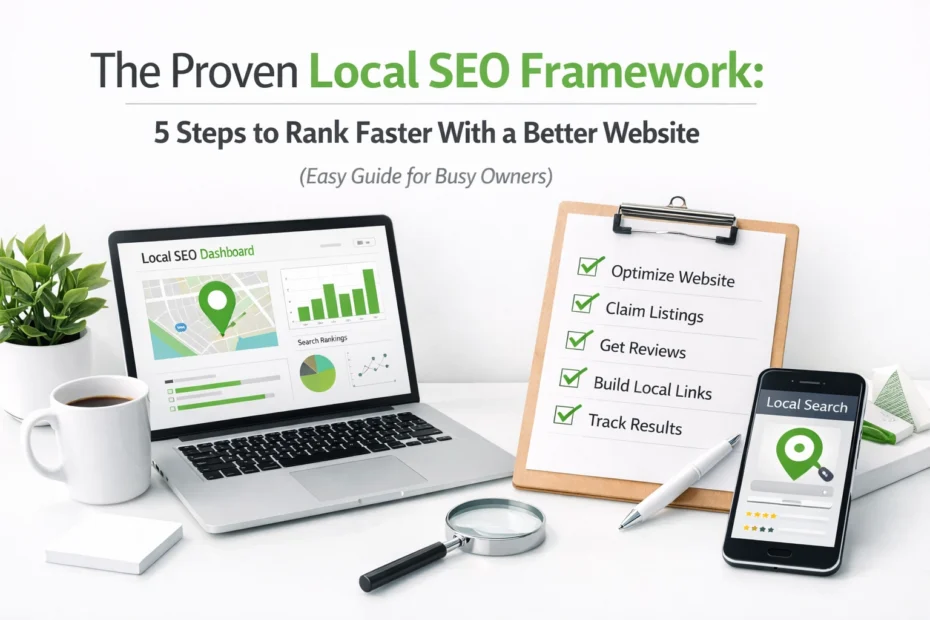
For many small business owners in Canada, the digital landscape feels like a moving target. Whether you run a local gym, a private school, or a contracting business, your ability to attract new customers depends heavily on how easily people can find you online. Search Engine Optimization is not just a buzzword; it is a fundamental requirement for staying competitive in your local neighbourhood.

Hi, I’m Jason, the owner-operator of ONLINEid. I see many business owners working incredibly hard on their craft but struggling because their website is essentially invisible to local searchers. This guide provides a proven local SEO framework designed for busy owners who need results without spending hours every day on technical maintenance. By following these five steps, you can improve your rankings and turn your website into a lead-generating asset.
Claim and Optimize Your Google Business Profile for Maximum Visibility
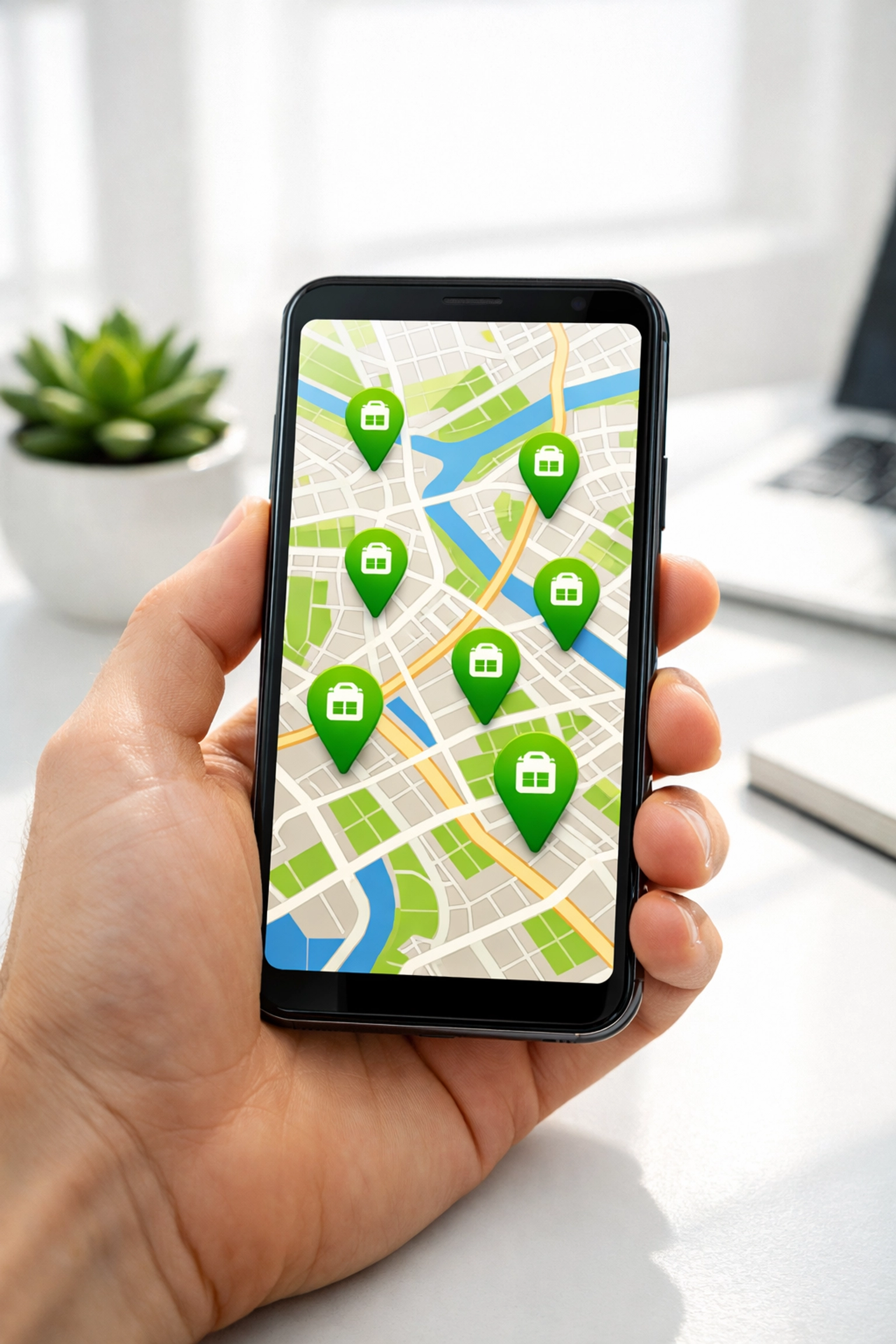
The first and most critical step in any local SEO strategy is managing your Google Business Profile. This profile is often the first thing a potential customer sees when they search for your services in their city. A complete and verified profile provides Google with the necessary data to place your business in the "Local Map Pack," which is the section of search results featuring a map and three prominent business listings.
Consistency is the foundation of this step. You must ensure your Name, Address, and Phone number (NAP) are identical across your website, your Google Business Profile, and any other online directories. Even small discrepancies, such as writing "Street" in one place and "St." in another, can sometimes confuse search engine algorithms. Providing clear, consistent data builds trust with both Google and your potential customers.
Beyond basic contact information, you should utilize all the features Google offers. Write a compelling business description of up to 750 characters that includes your primary services and your local area. Add high-quality photos of your team in action, your storefront, and your completed projects. If you are a contractor in Toronto, for example, showing real work in local neighbourhoods is vital. For more detailed advice on this specific platform, you can read about 7 things Toronto businesses should do right now for their Google Business Profile.
Develop a Targeted Local Keyword Strategy for Your Website Content
Once your external profile is set up, you must focus on the content of your own website. General keywords like "contractor" or "fitness centre" are too broad and highly competitive. To rank faster, you need to target geo-modified keywords that reflect how local customers actually search. Phrases like "kitchen renovation in Oakville" or "martial arts classes near me" are much more effective for driving relevant traffic.
Integrating these keywords naturally into your title tags, meta descriptions, and headlines is essential. Every page on your site should have a clear purpose and a specific local focus. If your business serves multiple locations, it is a mistake to list them all on one generic page. Creating dedicated landing pages for each service area allows you to include location-specific details, such as local landmarks or specific neighbourhood testimonials, which signals to search engines that you are a relevant local authority.
This approach is a core part of a simple 5-step plan to build a small business website that brings in local customers. When your content speaks directly to the needs of your local community, you naturally improve your engagement rates and search rankings.
Prioritize Technical SEO and Structured Data Markup
Technical SEO ensures that search engines can crawl and index your site without issues. For local businesses, mobile optimization is the most important technical factor. Most local searches occur on smartphones while people are on the go. If your website is slow to load or difficult to navigate on a mobile device, potential customers will leave, and your search ranking will suffer.

Another vital technical element is Local Business Schema markup. This is a specific type of code (JSON-LD) added to your website that helps search engines understand your business details in a structured way. It explicitly tells Google your operating hours, your price range, and your physical location. This structured data makes it easier for search engines to display your information accurately in search results and AI-driven search summaries.
Neglecting the technical health of your site can lead to significant problems. Security and speed are ranking factors that cannot be ignored. To understand how technical issues might be impacting your performance, you can review 5 security risks killing your small business site. Maintaining a clean, fast, and secure site is a requirement for ranking well in 2026.
Cultivate Local Authority Through Reviews and Citations
Local authority is built through social proof and external validation. Google views high-quality reviews and mentions on other reputable websites as votes of confidence in your business. Actively encouraging your satisfied customers to leave reviews on your Google Business Profile is one of the most effective ways to boost your local ranking.

Responding to all reviews, both positive and negative, is equally important. It shows that you are an active business owner who cares about customer experience. In addition to reviews, you should seek out local citations. These are mentions of your business on local chamber of commerce websites, community blogs, or niche-specific directories. These links act as "digital word-of-mouth," confirming to search engines that you are a legitimate part of the local economy.
Building this authority is a long-term strategy, but it is what separates top-ranking businesses from the rest. If you find that your website is attracting visitors but not converting them, you may need to look at how you are presenting your authority. Check out 10 reasons your small business website isn't generating leads to see if a lack of social proof is holding you back.
Track Your Analytics and Refine Your Growth Strategy
The final step in the framework is continuous monitoring. SEO is not a "set it and forget it" task. You must track how users are finding you and what they do once they arrive at your site. Tools like Google Analytics 4 and Google Search Console provide invaluable insights into your keyword rankings, click-through rates, and user behaviour.
By analyzing this data, you can identify which services are most popular and which pages need improvement. For instance, you might notice that a specific blog post about "basement waterproofing tips" is bringing in a lot of local traffic. This is a signal to create more content around that topic. Regularly auditing your performance allows you to adapt to changes in search engine algorithms and shifting customer needs.
Understanding why local businesses need to be found online in 2026 will help you stay motivated to maintain this framework. The digital landscape is evolving with AI and voice search, and staying on top of your data is the only way to ensure your business remains visible to your neighbours.
Summary of the Local SEO Framework
Implementing a successful local SEO strategy involves a combination of external profile management, on-page content optimization, technical excellence, authority building, and data analysis. By focusing on Google Business Profile consistency and targeting local keywords, you establish a strong foundation. Supporting this with structured data and a mobile-friendly design ensures search engines can easily process your information. Finally, by gathering reviews and monitoring your progress, you create a sustainable system for growth. Each of these steps is essential for creating a website that not only ranks well but also serves as a reliable source of new leads for your small business.
If you are a busy owner and want to ensure your website is working as hard as you are, we can help. At ONLINEid, we specialize in making the complex world of digital services simple for local businesses.
If you have questions about your website or want to start ranking higher, call us at (289) 807-6364. We are ready to help you get your business found online.