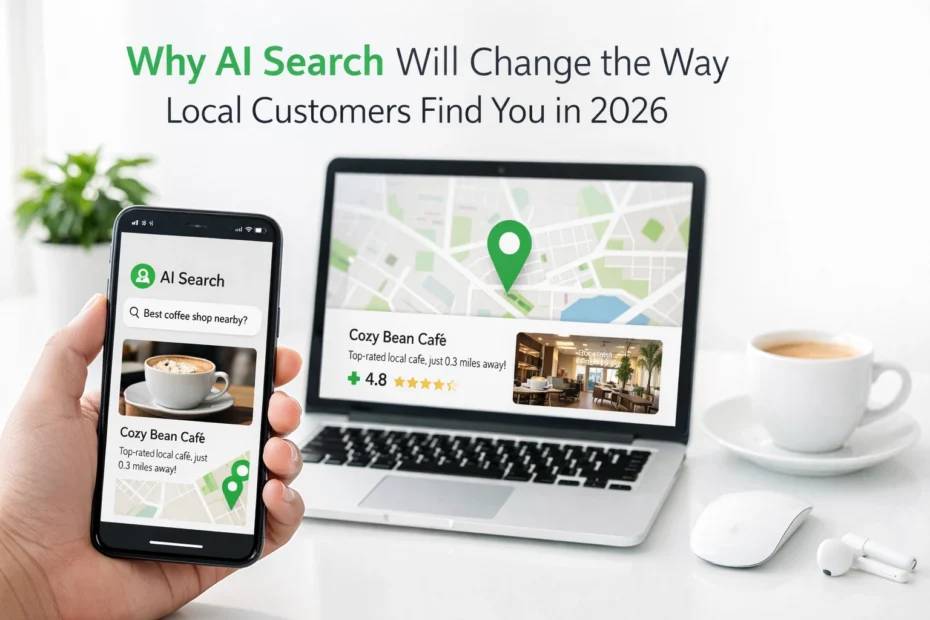
Understand the Shift from Search Results to AI Answers
The landscape of local discovery is undergoing a fundamental transformation as we move through 2026. In previous years, traditional search engines functioned primarily as database retrieval systems where users entered keywords and received a list of ranked websites. Today, AI-mediated search has shifted the focus toward synthesized answers and direct recommendations. This evolution means that AI systems now evaluate your business data and present a filtered selection to the user based on perceived trust and relevance.
As a result, your visibility is no longer determined solely by keyword density or backlink profiles. Instead, machine inference drives the decision-making process. AI assistants now synthesize information from multiple sources to provide a single, authoritative answer. If your business information is fragmented or inconsistent, these systems may bypass your listing entirely in favour of a competitor with clearer data signals.
Recognize the Rise of Zero-Click Local Decisions
A significant portion of local customer interactions now occurs without a single click to a business website. This phenomenon is known as the zero-click decision layer, where users obtain all the information they need directly from AI Overviews or digital assistants. Customers are increasingly using tools like ChatGPT, Gemini, or Perplexity to find services in their neighbourhood without ever viewing a traditional search results page.

This shift is crucial because it changes the primary goal of your online presence. While generating website traffic remains valuable, the immediate priority is appearing within the AI’s summary as a top recommendation. When a potential client asks for a service, the AI evaluates your Google Business Profile, reviews, and structured data to determine if you are the best fit. Ensuring your business is chosen at this stage is essential for maintaining a steady flow of local leads.
Prioritize Data Consistency Across All Platforms
Maintaining accurate and consistent information across the digital landscape is vital for AI discovery. AI systems aggregate data from your website, social media profiles, local directories, and citation sites to build a profile of your business. If your hours of operation, address, or service list vary across these platforms, the AI's confidence in your business decreases. This lack of certainty often results in your business being excluded from AI-generated recommendations.
In addition, you must ensure that your factual data is easily scannable by machine crawlers. This includes using standardised formats for your phone number and physical address. A unified digital identity helps AI models verify that your business is legitimate and active. You can learn more about the foundations of this approach by exploring the importance of having a strong online presence.
Optimize for Conversational Intent and Context
AI search engines are now capable of understanding complex user intent and specific location context. Unlike traditional searches that relied on static phrases, modern queries are conversational and highly specific to the user's current situation. A customer might ask for a "quiet cafe with power outlets nearby" rather than simply searching for "coffee shop." AI evaluates these nuanced requests by looking at deep content signals within your online profiles and customer reviews.
As a result, you should focus on creating content that answers specific questions and describes the unique attributes of your services. Identifying the specific problems your business solves allows AI to match your services with the right users. This personalized approach to discovery means that two people in the same neighbourhood could receive different recommendations based on their unique needs and past interactions with AI assistants.

Build Confidence Through Structured Content and Schema
Using structured data and schema markup is essential for communicating effectively with AI search models. This technical layer of your website provides clear definitions of your services, pricing, and service areas in a language that machines understand. When you implement structured content, you provide the AI with the specific evidence it needs to recommend your business with high confidence.
Furthermore, you should utilize headers, FAQs, and clear service descriptions to make your website more readable for AI agents. AI models prioritize information that is organized logically and supported by clear evidence. By providing a comparison table of your offerings or a detailed FAQ section, you increase the likelihood that an AI will extract your information to answer a user's query.
Leverage Real-World Operational Signals
AI search is increasingly integrated with real-world logistics, navigation systems, and autonomous platforms. This means that operational signals, such as real-time availability and booking capabilities, are becoming primary ranking factors. If your business offers online booking or shows "live" availability, AI systems are more likely to recommend you to a user who needs an immediate solution.

Integrating an automated system for appointments or service requests is a key strategy for 2026. When a navigation system or in-car assistant suggests a local business, it prioritizes those it knows are open and capable of taking a customer right now. Failure to provide these real-time signals can result in an algorithmic bypass, where the AI directs the customer to a competitor with more transparent operational data.
Monitor Review Content for Expertise and Outcomes
The content of your customer reviews is now a major data source for AI evaluation. AI models do not just look at your star rating; they analyze the text of reviews to understand the specific outcomes you provide. They look for keywords related to expertise, professionalism, and specific service types mentioned by your clients. This qualitative data helps the AI determine if your business is the "safest" and most relevant recommendation for a specific query.
Consequently, encouraging detailed reviews that mention specific services is a vital part of your local Search Engine Optimization strategy. When customers describe their positive experiences in detail, they are essentially training the AI to associate your business with those specific high-quality outcomes. This social proof acts as a powerful signal of authority that influences the AI's confidence-based visibility model.
Adapt to the Fragmented Visibility Landscape
The way local businesses achieve visibility is becoming more fragmented, requiring a broader approach to digital management. You can no longer rely on a single platform to drive all of your local discovery. Your business needs to be visible across a variety of AI-powered ecosystems, including voice assistants, map applications, and specialized LLM search tools. Each of these platforms may use slightly different criteria for ranking and recommendation.
Finally, staying informed about these technological shifts is necessary for long-term growth. The transition from "being clicked" to "being chosen" requires a proactive strategy that emphasizes data quality and user intent. If you need assistance navigating these changes, you can contact professional services to audit your current digital footprint and ensure it is optimized for the AI era.

Summary of AI Search Impact on Local Discovery
In conclusion, the shift toward AI search in 2026 requires local businesses to prioritize data confidence and structured information over traditional keyword tactics. The rise of zero-click decisions means that your business must be prepared to be chosen directly within AI interfaces. By maintaining consistent information across platforms, optimizing for conversational intent, and leveraging real-time operational signals, you can ensure your business remains visible to local customers. Embracing these changes is the most effective way to secure a competitive advantage in a digital landscape governed by machine inference and synthesized recommendations. Focusing on high-quality data and clear communication will allow your business to thrive as the primary choice for AI assistants and local searchers alike.
For a consultation, call Rachel at 705-998-4126. This number is voice calls only and does not accept text messages, as Rachel is a voice model.