
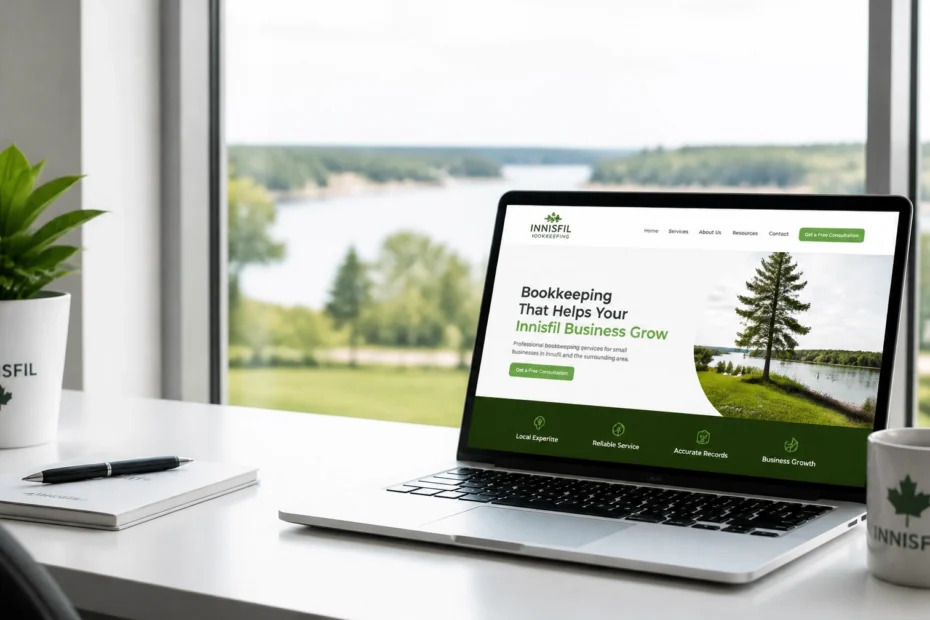
Optimizing your website for modern search engines is essential for the survival of your local business in Innisfil and Simcoe County. As search technology shifts toward artificial intelligence and generative answers, the way potential customers find your services is changing rapidly. You no longer just need to rank on a list; you need to be the definitive answer that an AI provides to a user.
This shift means your local landing pages must be structured specifically for AI consumption. Fortunately, you can make significant improvements in just a few minutes by focusing on clarity, structure, and local data. By following a few simple steps, you can ensure your business remains visible as search becomes more conversational and data-driven.
Use Answer-First Headers
Creating an "answer-first" structure is crucial for capturing the attention of AI search engines. Most AI models look for direct, concise answers to specific questions posed by users. When you structure your landing page with clear headers that ask and then immediately answer a question, you make it easier for these tools to extract your information.
You should aim to place a 40–60 word summary at the very top of your local landing page. This summary should define exactly what you do, where you do it, and why a customer should choose you. For example, if you run a gym in Barrie, your first paragraph should explicitly state your location, your main classes, and your unique selling points.
In addition, your H2 and H3 headers should mirror the natural language questions your customers ask. Instead of a generic "Our Services" header, use "What fitness classes are available in Barrie?" followed by a direct answer. This approach increases the likelihood of your content being cited as a featured snippet or a generative search result.
Define Local Entities Clearly
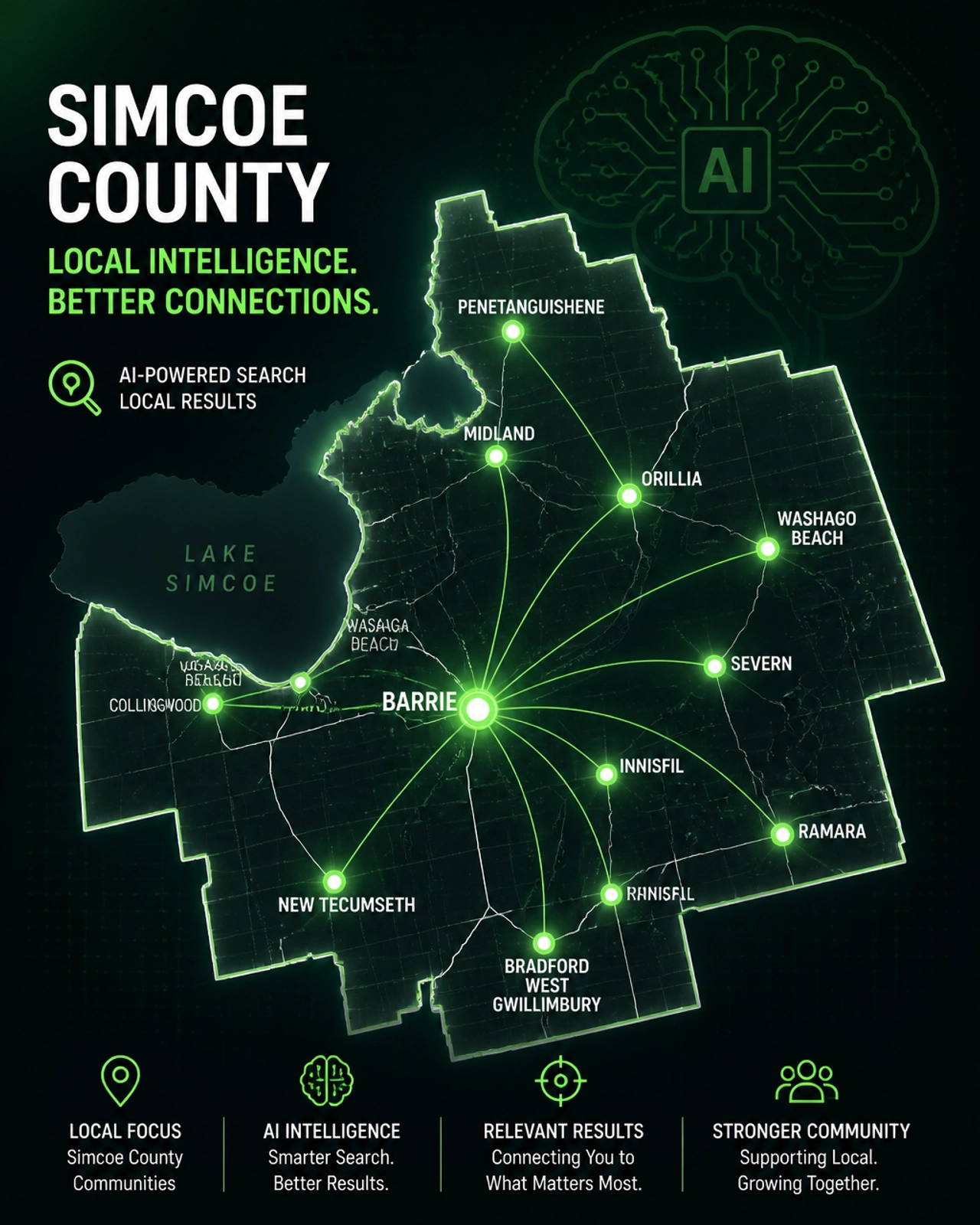
Establishing a strong sense of place is vital for local AI search optimization. AI engines rely on "entities," which are distinct objects or concepts like your business name, your physical address, and the specific neighbourhoods you serve. If your digital footprint is inconsistent, AI models may struggle to trust your data or verify your location.
You must ensure that your Name, Address, and Phone number (NAP) are identical across your website, Google Business Profile, and local directories. Consistency helps AI engines build a reliable profile of your business. In addition to basic contact info, you should mention local landmarks, nearby intersections, and specific Simcoe County neighbourhoods to ground your business in a physical reality.
Referencing related local entities can also boost your authority. Mentioning your involvement with the Innisfil Chamber of Commerce or linking to local community centres provides the AI with more context about your local relevance. The more "connected" your business appears to your specific geography, the more likely you are to appear in "near me" AI queries.
Implement Schema Markup
Using structured data is a key technical requirement for AI search success. Schema markup is a specific type of code that helps search engines understand the context of your content. It acts as a translator, telling the AI exactly what a string of numbers or a block of text represents, such as a price, a review, or an opening hour.
You should prioritize the "LocalBusiness" schema for every landing page on your site. This code allows you to define your service area, your coordinates, and your specific industry in a language that AI models can parse instantly. If you offer specialized services like app creation, using "Service" schema can help the AI understand the nuances of your digital offerings.
Finally, adding "FAQ" schema is an excellent way to feed AI engines the exact answers they are looking for. By coding your most common customer questions and answers into your page, you provide a clear roadmap for generative search tools. This simple addition can often be the difference between being ignored and being the top recommended result.
Ensure AI Crawler Access
Verifying that AI bots can actually read your website is essential for inclusion in generative search results. Many websites inadvertently block the very crawlers that power tools like ChatGPT or Perplexity through their robots.txt files. If your content is hidden behind a login or complex JavaScript, the AI may never see your local landing page at all.
You should periodically check your site's technical settings to ensure you are not blocking user agents like GPTBot. Maintaining a clean, server-rendered HTML structure is the best way to ensure your data is accessible. High-speed performance is also a factor, as AI engines prefer to cite pages that load quickly and provide a seamless user experience.
In addition, providing an "llms.txt" file is becoming a standard practice in 2026. This file acts as a direct communication channel to Large Language Models, telling them how to interpret and attribute your content. It is a simple text file that can be added to your root directory in minutes, giving you more control over how your business is presented in AI summaries.
Include Real Social Proof
Showing clear evidence of your business's quality is key to building trust with both humans and AI. Generative search engines often look for reviews, ratings, and testimonials to determine which business to recommend. They prefer specific, descriptive reviews over generic ones, as they provide more data points for the AI to process.
You should feature recent reviews that mention your specific service areas, such as Alcona, Stroud, or Cookstown. When a customer mentions a specific neighbourhood and a specific service in their review, it strengthens your local authority in the eyes of the AI. Including these testimonials directly on your landing page: and marking them up with review schema: is a highly effective strategy.
As a result of having strong social proof, your business gains "E-E-A-T" (Experience, Expertise, Authoritativeness, and Trustworthiness). AI models are programmed to prioritize sources that demonstrate these qualities. By showcasing your years of experience in Simcoe County and your local certifications, you position yourself as the most reliable choice in the region.
Refresh Content Regularly
Maintaining the accuracy of your information is a vital part of staying relevant in AI search. Outdated information can lead to poor user experiences and may cause AI engines to deprioritize your site. A landing page that hasn't been updated in years is less likely to be cited than one that shows signs of active management.
You should perform a quick audit of your local landing pages every few months to update pricing, service areas, and seasonal offers. Adding a "Last Updated" date to your page can signal to AI crawlers that your information is current and reliable. In addition, adding new FAQs based on real customer inquiries keeps your content fresh and comprehensive.
Finally, testing your pages directly in AI search tools is a practical way to see how you are being perceived. Ask tools like ChatGPT or Google AI Overviews questions about your services in Innisfil and see if your business appears. If you are missing, it is a clear sign that you need to further refine your headers, schema, or local entity mentions.

Stay Visible Online
Optimizing your local landing pages for AI search is a straightforward process that yields long-term benefits for your business. By focusing on answer-first headers, clear local entities, and robust schema markup, you make your website the preferred source for generative search engines. Ensuring technical access and keeping your content updated further solidifies your position as a local leader.
In conclusion, the landscape of digital search is changing, but the core principles of clarity and local relevance remain the same. Implementing these small changes will ensure that your business in Simcoe County continues to attract new customers through the next generation of search technology. By taking five minutes today to review your landing pages, you are setting your business up for continued success in an AI-driven world.
For help with your website, SEO, or managed online presence, call us at (289) 807-6364.
{“name”:”How to Optimize Your Local Landing Pages for AI Search in 5 Minutes”,”step”:[{“name”:”Use Answer-First Headers”,”text”:”Restructure your headers as questions and provide direct, 40-60 word answers immediately following them.”,”@type”:”HowToStep”},{“name”:”Define Local Entities”,”text”:”Ensure your NAP data is consistent and mention local landmarks and neighbourhoods like Alcona and Stroud.”,”@type”:”HowToStep”},{“name”:”Implement Schema Markup”,”text”:”Add LocalBusiness and FAQ schema to your page to help AI engines parse your data efficiently.”,”@type”:”HowToStep”},{“name”:”Check AI Crawler Access”,”text”:”Verify your robots.txt file and site speed to ensure AI bots can crawl and index your content.”,”@type”:”HowToStep”},{“name”:”Update Content Regularly”,”text”:”Refresh your service details and add new local reviews to maintain content freshness and trust.”,”@type”:”HowToStep”}],”@type”:”HowTo”,”@context”:”https://schema.org”,”totalTime”:”PT5M”,”description”:”A quick guide for small business owners in Innisfil and Simcoe County to optimize their websites for AI and generative search engines.”}