

Your website is the first impression most potential clients will have of your contracting business. In an industry where trust and credibility are essential, contractor website design directly impacts your ability to generate leads and win projects. A well-designed website converts visitors into paying clients, while a poorly executed one sends them to your competitors.
This guide covers the fundamental principles of contractor website design and lead generation for contractors. By following these strategies, you will create a professional online presence that attracts homeowners, property developers, and commercial clients searching for reliable contractors.
Understand Your Target Audience
Defining your ideal client is the foundation of effective contractor marketing. Your website must speak directly to the people who hire contractors: homeowners planning renovations, property developers managing commercial projects, or facility managers seeking maintenance services.
Research what your target audience searches for online. Homeowners often look for specific services like "kitchen remodelling" or "bathroom renovation," while commercial clients search for "commercial construction contractors" or "tenant improvement specialists." Understanding these search patterns allows you to structure your website content around the terms your potential clients actually use.
Avoid generic messaging that fails to differentiate your services. The term "contractor" encompasses a wide range of specialties, from residential renovations to large-scale commercial projects. Be specific about what you offer and who you serve to attract qualified leads rather than general inquiries.

Establish Visual Consistency
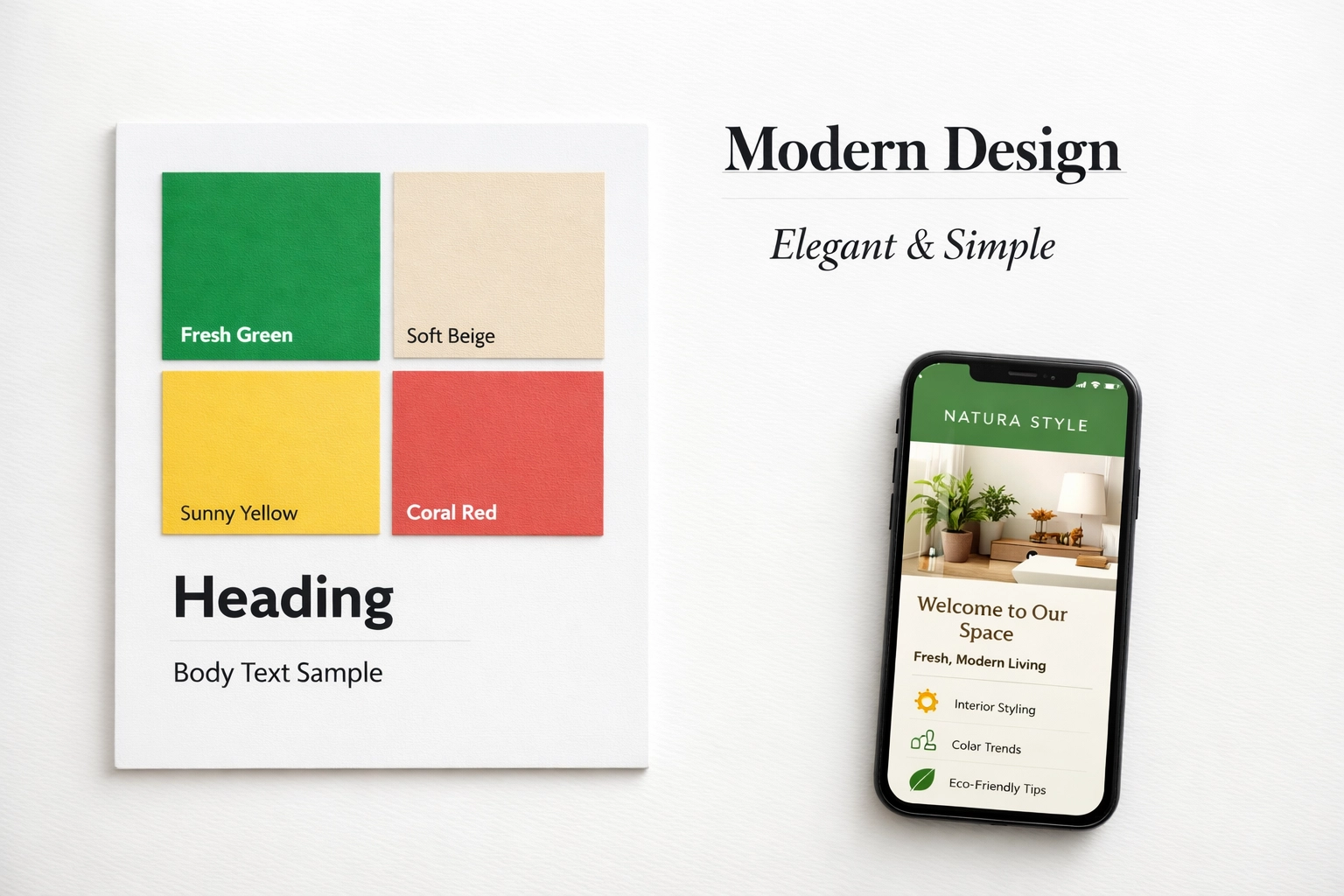
Your visual identity communicates professionalism before visitors read a single word on your site. Create a cohesive colour scheme using one primary colour, two accent colours, and a consistent font colour. This four-colour system provides enough variety to create visual interest while maintaining professional consistency across every page.
Apply your chosen colours consistently throughout your website. Use your primary colour for major elements like headers and call-to-action buttons, accent colours for secondary elements, and ensure strong contrast between your text and background colours. This consistency builds trust and reinforces your brand identity.
Select readable fonts that remain clear on all screen sizes. Avoid decorative fonts that sacrifice legibility for style. Your typography should support easy scanning and reading, particularly on mobile devices where screen space is limited.
Prioritize Website Performance
Fast loading speeds are critical for contractor website design. Slow websites lead to higher bounce rates and cost you quote requests, particularly on high-value projects where clients are comparing multiple contractors. Every second of delay reduces the likelihood that a visitor will wait for your content to load.
Compress your project images before uploading them to your website. High-resolution photos showcase your work effectively, but unnecessarily large file sizes slow down your entire site. Use image compression tools that maintain visual quality while reducing file size by 60-70%.
Choose reliable hosting with adequate resources for your traffic levels. If you serve clients across multiple regions or nationally, consider using a content delivery network (CDN) to deliver your website content from servers located closer to your visitors.
Optimize for Mobile Devices
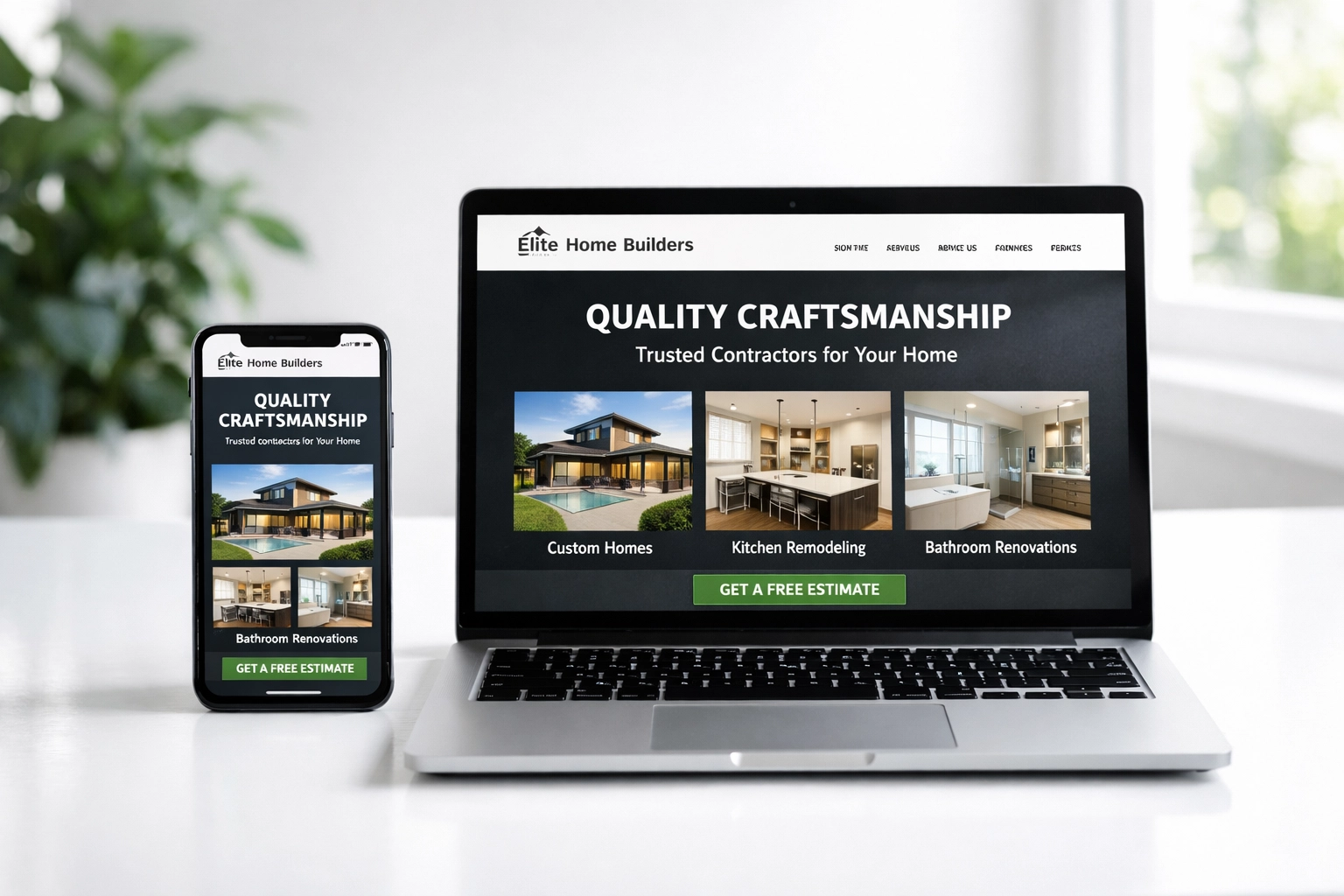
Mobile-first design is non-negotiable for contractor websites. Over 60% of construction website visitors use smartphones or tablets to research contractors, request quotes, and view project portfolios. Your site must automatically adjust its layout to fit different screen sizes without requiring horizontal scrolling or pinch-to-zoom actions.
Test your website on multiple devices to ensure seamless functionality. Navigation menus should collapse into mobile-friendly formats, images should resize proportionally, and contact forms should be easy to complete on touchscreens. A mobile visitor who struggles to navigate your site will move on to a competitor within seconds.
Make phone numbers clickable on mobile devices. When a potential client views your website on a smartphone, they should be able to tap your phone number to initiate a call immediately. This simple functionality removes friction from the lead generation process.
Showcase Your Work with High-Quality Imagery
Visual proof of your capabilities is essential for contractors' lead generation. Use large-scale, full-width images of completed projects to create an immersive experience that demonstrates your craftsmanship. These images should dominate your portfolio pages, with minimal text overlay that might distract from the quality of your work.
Organize project photos by category or service type. Create dedicated gallery pages for different specialties like residential remodelling, commercial construction, or specialty services. This organization helps potential clients quickly find examples relevant to their planned projects.
Include before-and-after photos when possible. These comparisons effectively illustrate your ability to transform spaces and solve problems, making them particularly valuable for renovation-focused contractors.
Create Intuitive Navigation
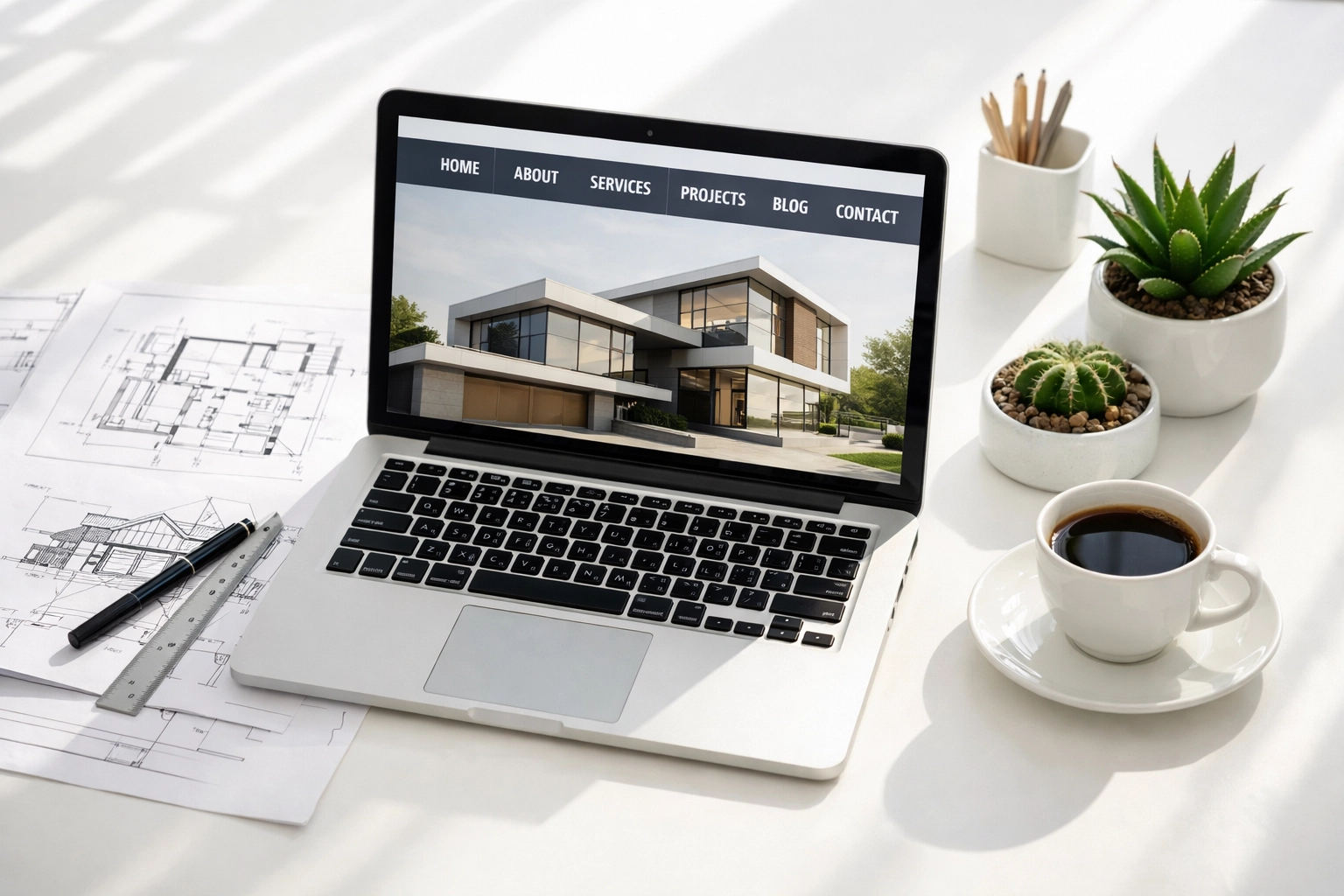
Your website structure must guide visitors logically from initial interest to contact. Organize your navigation menu with clear, descriptive labels like Services, Portfolio, About Us, and Contact. Avoid creative menu labels that confuse visitors or require interpretation.
Structure your service pages to flow from general to specific. Start with an overview of what you offer, then break it down into detailed descriptions of individual services. Each service should have its own page optimized for relevant keywords like "contractor website design" and specific service terms.
Use white space effectively to prevent visual clutter. Crowded layouts overwhelm visitors and reduce comprehension. Create breathing room between sections, images, and text blocks to improve readability and guide the eye through your content naturally.
Implement Strong Calls-to-Action
Clear calls to action (CTAs) are vital for converting website visitors into leads. Use action-oriented language that tells visitors exactly what to do: "Request a Free Quote," "Schedule a Consultation," or "View Our Portfolio." These direct instructions eliminate ambiguity about the next step.
Make CTAs visually prominent through contrasting colours and strategic placement. Your primary CTA button should stand out from surrounding elements using your accent colour. Place CTAs at logical decision points throughout your website: after describing your services, within your portfolio, and on your homepage.
Provide multiple contact options to accommodate different preferences. Include a detailed contact form for visitors who prefer written communication, display your phone number prominently for those who want immediate answers, and consider live chat for quick questions during business hours.

Build Trust Through Social Proof
Client testimonials and reviews strengthen your credibility after impressive project photos capture attention. Display specific testimonials that describe the quality of your work, communication, and reliability. Generic praise like "great job" carries less weight than detailed accounts of positive experiences.
Include the client's full name, location, and project type with each testimonial when possible. This specificity increases authenticity and helps potential clients identify with reviewers who completed similar projects.
Feature any industry certifications, awards, or professional affiliations prominently. These credentials differentiate your business from less qualified competitors and provide additional assurance to risk-averse clients considering significant investments.
Optimize for Local SEO
Search engine optimization is essential for contractor marketing because most clients search for contractors serving their specific geographic area. Create dedicated service pages for each offering, using clear URL structures like "yourwebsite.com/kitchen-remodeling" rather than generic page identifiers.
Target location-based keywords throughout your website content. Include your city, county, and region in page titles, headers, and naturally within your text. Create blog content addressing topics like "choosing the best contractor in [your city]" to capture location-specific searches.
Implement schema markup for local businesses and reviews. This structured data helps search engines understand your business information and can result in enhanced search listings that display ratings, contact information, and business hours directly in search results.
Simplify the Quote Request Process
A complicated contact process costs you leads. Create a streamlined quote request form that collects essential information without overwhelming potential clients. Ask for name, contact information, project type, timeline, and budget range: enough to qualify the lead and prepare for initial conversation.
Consider offering multiple form options. A detailed form serves clients ready to discuss specific project requirements, while a simple "quick contact" form captures leads from visitors still in the research phase. Both forms should be easy to complete on mobile devices.
Maintain and Update Your Website Regularly
Your contractor website design requires ongoing attention to remain effective. Update your portfolio regularly with recent projects to demonstrate active business and current capabilities. Remove outdated information, broken links, and old contact details that undermine your professional image.
Monitor your website performance using analytics tools. Track which pages generate the most inquiries, where visitors spend their time, and where they exit your site. This data reveals opportunities to improve your lead generation effectiveness.
In conclusion, effective contractor website design combines visual appeal with strategic functionality to convert visitors into qualified leads. By prioritizing mobile optimization, fast performance, clear navigation, and strong calls to action, your website becomes a reliable lead-generation tool. Implement these principles systematically, and your online presence will attract the clients you want while establishing your reputation as a professional, trustworthy contractor.
If you need professional assistance building or improving your contractor website, ONLINEid specializes in creating high-performance websites that generate leads and grow contracting businesses.