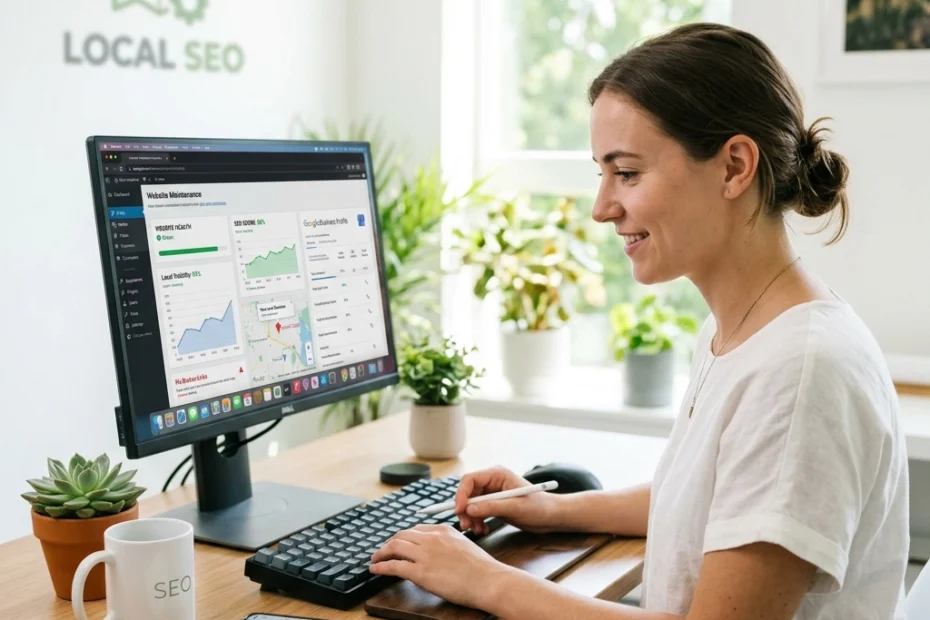
Maintaining a website is a lot like maintaining a physical storefront in a busy neighbourhood like Innisfil. If the paint is peeling, the lights are flickering, and the front door is stuck, people will eventually stop coming in. For small businesses, your website is often the first point of contact for local customers. Whether you are a local contractor, a gym owner, or a school administrator, neglecting your site’s health can lead to a significant drop in your local search engine rankings.
Many business owners view website design as a "one and done" project. However, the digital landscape changes rapidly, and what worked a year ago might be holding you back today. Failing to perform regular maintenance does more than just make your site look outdated; it actively tells search engines like Google that your business might not be the best result to show to local searchers. By understanding and fixing these common maintenance mistakes, you can protect your small business website design and ensure you stay at the top of the search results.
Prioritize Website Loading Speed
Website speed is crucial for both user experience and search engine optimization. If your page takes more than three seconds to load, a large percentage of your visitors will click the back button before they even see your logo. Search engines monitor this behaviour closely. When users frequently "bounce" away from your site, Google interprets this as a sign that your website is not providing a good experience. As a result, your rankings in local searches will begin to slip.
Many factors can slow down a site over time. Often, the culprit is a collection of old plugins that are no longer necessary or a bloated theme that hasn't been updated. In addition, as you add more content to your site, the database can become cluttered. Regular website maintenance services include cleaning up these backend elements to keep everything running smoothly. A fast site is essential if you want to beat out the competition in a crowded local market.

Maintain Consistent NAP Data
Consistency in your Name, Address, and Phone Number (NAP) is vital for local SEO success. This information acts as your digital fingerprint across the internet. If your business moves to a new street in the neighbourhood or changes its phone number, you must update this information everywhere immediately. If your website lists one address while your Google Business Profile or a local directory lists another, search engines become confused.
This confusion leads to a lack of trust in your data. When search engines are not 100% sure about your location or how to contact you, they are less likely to display your business in the "Local Pack": the map section at the top of the search results. Therefore, checking your footer, contact page, and any location-specific pages for accuracy is a task you should perform at least once a month. It is a simple step that has a massive impact on your local visibility.
Focus On Mobile Responsiveness
Optimizing for mobile users is essential because the majority of local searches now happen on smartphones. People searching for a "contractor near me" or "gyms in Innisfil" are usually doing so while they are on the go. If your website is difficult to navigate on a mobile device, or if the text is too small to read without zooming, you are creating a barrier for your customers. Google uses mobile-first indexing, meaning it primarily looks at the mobile version of your site to determine your ranking.
A common mistake is assuming that because a site looked good on a phone when it was launched, it still functions perfectly today. Updates to mobile browsers and operating systems can occasionally break parts of your mobile layout. Regular testing on different devices ensures that your buttons are clickable and your forms are easy to fill out. Finally, a mobile-responsive site ensures that you don’t lose potential leads to a competitor whose site is easier to use on a smartphone.

Update Local Keywords and Content
Refreshing your content is key to staying relevant in local search results. Many businesses make the mistake of letting their blog or service pages sit idle for months or even years. Search engines prefer "fresh" content because it indicates that the business is active and providing up-to-date information. If you haven't updated your site since 2024, it might be time to look at your keyword strategy.
Using local keywords naturally throughout your site helps search engines understand exactly which areas you serve. For instance, a contractor website design should include specific neighbourhood names and local landmarks where relevant. Instead of just saying you offer "renovation services," mention that you provide "kitchen renovations in Innisfil and the surrounding Simcoe County area." This level of detail helps you capture highly targeted local traffic. In addition, regularly posting helpful articles or project updates can establish you as a local authority in your field.
Fix Broken Links and Crawl Errors
Identifying and fixing technical errors is a fundamental part of website maintenance. Over time, links that used to work might break, or pages you’ve deleted might still be linked from other parts of your site. These "404 errors" are frustrating for users and problematic for search engine crawlers. If a Google bot encounters too many broken links, it may stop crawling your site as efficiently, which can lead to new content not being indexed.
Regularly using tools like Google Search Console can help you spot these errors before they cause major damage. In addition to broken links, you should look for "crawl errors" where search engines are being blocked from accessing important pages. Fixing these issues is a vital step in maintaining a healthy relationship with search algorithms. As a result, your site will be easier to navigate for both humans and bots, leading to a more stable ranking over time.

Optimize Your Visual Assets
Managing your images and videos is essential for keeping your site fast and professional. High-resolution images are a great way to showcase your work, but if they are not properly compressed, they can be the single biggest factor slowing down your website. Many business owners upload photos directly from their phones or cameras without realizing the file size is several megabytes. A few of these images on one page can make the loading time unbearable for someone on a slow mobile connection.
Proper image optimization involves resizing images to the actual dimensions they will be displayed at and using modern formats like WebP. Furthermore, you must ensure that every image has descriptive "alt text." This text helps search engines understand what is in the photo, which is a great opportunity to include local keywords. For example, an alt tag for a gym photo could be "Innisfil gym weightlifting area." This helps your images appear in Google Image Search, providing another pathway for local customers to find you.
Monitor Security and Software Updates
Staying on top of security updates is a key responsibility for any business with a digital presence. If your website software, themes, or plugins are outdated, your site becomes a target for hackers. A compromised website is a disaster for local SEO. If Google detects malware on your site, it will display a "This site may be hacked" warning next to your search listing, which will drive away almost all of your traffic.
Beyond security, software updates often include performance improvements and new features that keep your site compatible with modern web standards. Ignoring these updates can lead to "plugin conflicts" where different parts of your site stop working together correctly. A regular maintenance schedule ensures that your site remains a secure and reliable resource for your community. If you aren't sure how to handle these updates, reaching out to a professional web development company is a smart move to protect your investment.

Audit Your Internal Linking Structure
Refining how your pages link to one another is a subtle but powerful way to boost your SEO. Internal links help search engines understand the hierarchy of your site and which pages are the most important. If you have a main service page but no other pages link to it, search engines might view it as less significant. By linking from your blog posts to your service pages, you pass "link equity" throughout your site.
For a local business, this means linking your various service area pages together or linking your homepage to your most popular local services. This structure makes it easier for visitors to find the information they need without having to dig through menus. In addition, it helps keep people on your site longer, which is a positive signal to search engines. Maintaining a logical and clean internal link structure is vital for a user-friendly experience.
In Conclusion
Regular website maintenance is an essential part of running a successful local business in the modern age. By avoiding common mistakes like slow loading speeds, inconsistent contact information, and poor mobile optimization, you can ensure that your site remains a powerful tool for attracting new customers. Keeping your content fresh and your technical errors to a minimum helps you maintain a strong presence in local search results. Ultimately, a well-maintained website reflects the quality and care you put into your business every day. If you stay proactive with your site's health, you will see the benefits in your traffic, your rankings, and your bottom line.
If you need help getting your website back on track or want to ensure your local SEO is working as hard as it should, give us a call. Rachel is ready to chat about how we can support your business and keep your digital presence in top shape. You can reach Rachel at 705-998-4126 to discuss your website needs.