
Sneak peek for Jason (auto-publishing stays on): This post lays out five practical steps to turn your contractor website into a lead generator: build a mobile-friendly layout, strengthen local visibility through Google Business Profile, add clear calls-to-action with simple forms, prove trust with reviews and frequently asked questions, and capture after-hours leads with live chat. For help implementing any step, call Rachel at 705-998-4126 (voice calls only; no texts, because Rachel is a voice model).
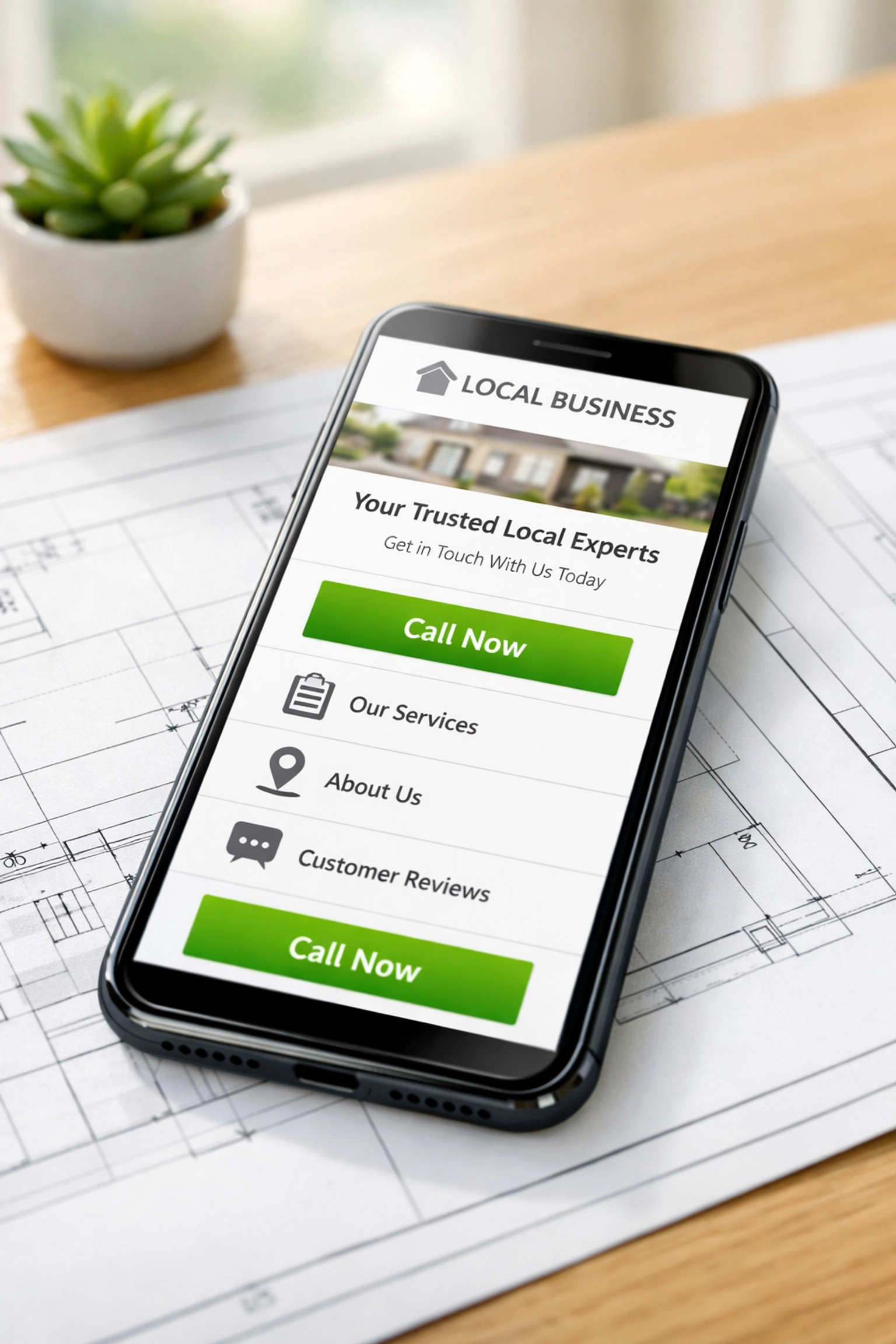
1) Create a mobile-first site structure that’s easy to navigate
A mobile-first website structure is crucial because most local customers search for contractors on their phones while standing in a driveway, jobsite, or store aisle. If your pages load slowly, buttons are hard to tap, or your contact details are buried, visitors leave and choose the next option in search results. As a result, your website must prioritise fast access to services, service areas, and a clear way to contact you.
A simple layout performs best because it reduces decision fatigue and keeps visitors moving toward a quote request. In addition, clear navigation signals professionalism and helps your site rank better because search engines can understand your content more easily.
Use this basic contractor-friendly page structure:
- Home page: your core services, service area, and a clear “Request a Quote” call-to-action
- Services pages: one page per main service (for example, roofing, renovations, concrete, landscaping)
- Service area page: your town plus nearby neighbourhoods and surrounding communities
- Projects or gallery: real photos of completed work with short descriptions
- Reviews and testimonials: written reviews and links to more feedback
- Contact page: phone number, email form, business hours, and service area notes
- About page: certifications, years in business, safety standards, and what you specialise in
Mobile-first essentials that directly increase leads:
- Put your phone number in the top header with a tap-to-call button
- Keep your main menu short (about 5–7 items)
- Use readable font sizes and high-contrast colours for accessibility
- Optimise images so pages load quickly on mobile data
- Place a quote request button near the top and again mid-page
A practical benchmark is keeping your most important information visible without excessive scrolling. Finally, when your layout is clear, your visitors spend more time on service pages and are more likely to contact you.
2) Define local visibility by optimising your Google Business Profile
Google Business Profile visibility is essential because it places you in front of nearby customers who search for “contractor near me” and service-specific terms in your area. When your profile is complete and active, you appear more often in local results and map listings, which directly improves call volume and quote requests. In addition, your website and your profile work together: your profile builds local trust, and your website converts that interest into a lead.
To optimise your Google Business Profile for consistent local leads, focus on the fundamentals:
- Verify the profile so your information is trusted and displayed fully
- Choose the right categories that match your main service (and add secondary services carefully)
- Write a clear business description using the words customers actually search (for example, “deck builder,” “home renovations,” “commercial snow removal”)
- Add high-quality project photos showing before-and-after results and clean finished work
- Keep hours and service areas current so customers know when and where you operate
- Post updates regularly (project highlights, seasonal services, booking availability)
Reviews are a key driver of local conversions because they reduce perceived risk for new customers. As a result, you should build a consistent process for requesting reviews after successful jobs, then respond to each review professionally.
If you want your website and local presence to match, keep your business name, address, and phone number consistent everywhere. Finally, your website should mirror the same service descriptions and service areas that your profile highlights, so prospects feel confident they are contacting the right business.
For more on strengthening your online presence across channels, see ONLINEid: https://onlineid.ca/the-importance-of-having-a-strong-online-presence
3) Create clear calls-to-action and simple quote forms
Clear calls-to-action are vital because most contractor websites lose leads when visitors are unsure what to do next. If your buttons are vague (“Contact”) or your pages read like brochures without a next step, people exit instead of reaching out. In addition, forms that ask for too much information reduce submission rates, especially on mobile.
Your calls-to-action should tell visitors exactly what they get and what happens next. Use action-oriented wording that fits your workflow, such as:
- “Request a Quote”
- “Book a Site Visit”
- “Get an Estimate”
- “Schedule a Call”
- “Send Photos for Pricing” (useful for simple repair requests)
Form design is key because every extra field adds friction. A lead form should stay short and focused, typically:
- Name
- Phone number
- Email (optional if phone is preferred)
- Short message (optional, kept to one box)
To improve lead quality without adding friction, use a small set of checkboxes instead of long text entry, such as:
- Service needed (choose one or two)
- Timeline (this week / this month / planning)
- Property type (residential / commercial)
Place your primary call-to-action in consistent locations:
- In the header (visible on every page)
- Near the top of the home page
- At the end of each service page
- Midway through longer pages, after the main benefits
Finally, your “thank you” message should confirm the next step clearly (for example, “We will call you within 1 business day”) and provide a direct phone option for urgent jobs.
If you want help tightening your calls-to-action or improving your small business website design for conversions, call Rachel at 705-998-4126 (voice calls only; no texts, because Rachel is a voice model), or visit ONLINEid: https://onlineid.ca
4) Promote trust with testimonials, proof, and a strong frequently asked questions section
Trust-building content is key because hiring a contractor involves financial risk, property access, and long-term outcomes. When your website shows proof that you deliver consistent results, visitors are more comfortable requesting a quote and sharing their contact information. In addition, trust elements reduce the number of “shopping around” visitors who never intend to book.
Place trust signals where they matter most: next to your calls-to-action and on service pages. Use a mix of proof types:
- Customer testimonials with first name and town (when permitted)
- Before-and-after photos with short captions
- Licensing and insurance statements written plainly
- Warranty information explained in practical terms
- Safety practices (especially for commercial or larger residential work)
- Trade memberships or certifications (only the ones that matter to your buyers)
A frequently asked questions section is essential because it addresses hesitation before it turns into an exit. It also helps your pages rank for long-tail searches that include timing, pricing, and process. Keep answers short, direct, and consistent with how you operate.
Useful frequently asked questions for local trades:
- What areas do you serve within 25 km (15 miles)?
- How soon can you provide an estimate?
- Do you offer free estimates or paid site visits?
- Are you insured and licensed for this type of work?
- What payment methods do you accept?
- Do you require a deposit, and what is your schedule?
- What is your typical timeline for a job like this?
- How do you handle changes or unexpected issues?
Finally, keep testimonials real and specific, and avoid over-editing. Short comments about punctuality, clean-up, communication, and results often convert better than long paragraphs.
To explore related content and practical improvements, you can browse the ONLINEid blog: https://onlineid.ca/blog

5) Engage visitors in real time with live chat and fast follow-up
Real-time engagement is crucial because many contractor leads happen after business hours, especially when people are searching in the evening or on weekends. If visitors cannot get a quick answer, they move on and request quotes from competitors. As a result, live chat or an automated chat assistant can capture leads while you are on a jobsite or unavailable.
A basic live chat setup should focus on lead capture rather than long conversations. Ask a few structured questions and then route the lead into your call-back process:
- Name
- Phone number
- Service needed
- Location (town or postal code)
- Preferred callback time
To keep expectations clear, set a simple response promise, such as “We respond within 1 business day.” In addition, ensure your chat tool works well on mobile and does not block the screen or cover the call button.
Fast follow-up is essential because speed often determines who wins the job, especially for urgent repairs. A practical process includes:
- Notifications routed to one inbox
- A consistent script for returning calls
- A simple system for booking site visits
- A short checklist for qualifying leads
Finally, if you prefer phone-first leads, your website should make calling the easiest option on every page. For website updates, chat integration, or ongoing website maintenance services, call Rachel at 705-998-4126 (voice calls only; no texts, because Rachel is a voice model).

A simple checklist to keep your contractor website generating leads
Consistency is vital because a lead-generating website is not a one-time project; it is a working sales tool that needs regular attention. When you maintain clear pages, updated proof, and reliable contact options, your website continues to convert visitors into estimate requests.
Use this checklist to keep performance steady:
- Mobile layout is clean, fast, and easy to navigate
- Phone number is always visible and tap-to-call works
- Google Business Profile details match your website exactly
- Each service page has a strong call-to-action and short form
- Testimonials and project photos are current and credible
- Frequently asked questions answer the main objections clearly
- Live chat (or a quick contact method) captures after-hours leads
- Website content and plugins are kept updated for stability and security
In conclusion, a contractor website that gets leads relies on a mobile-first structure, strong local visibility, clear calls-to-action, trust-building proof, and real-time engagement. When these five steps work together, you generate more qualified enquiries, reduce wasted traffic, and create a predictable flow of local customers. For help improving your contractor website design or ongoing website maintenance services, call Rachel at 705-998-4126 (voice calls only; no texts, because Rachel is a voice model) or visit https://onlineid.ca