Optimizing your website for "near me" searches is essential for any local business looking to capture nearby customers. When someone in Innisfil searches for a "contractor near me" or a "gym near me," Google uses specific data points to decide which businesses appear at the top of the results. As a small business owner, your website design must work in tandem with local search engine optimization strategies to ensure you are visible at the exact moment a customer is ready to buy.
1. Claim and Optimize Your Google Business Profile
Claiming your Google Business Profile is the most critical step in appearing for local searches. This profile serves as the primary source of information for the Google Maps "Local Pack" that appears at the top of search results. You must ensure that your business name, category, and service area are accurately defined to help the search engine categorize your website correctly.
Regularly updating your profile with new photos and posts is also vital for maintaining relevance. When you keep your profile active, it signals to search engines that your business is operational and engaged with the local community. You can encourage your satisfied customers to leave feedback by directing them to onlineid.ca/google-review, which helps build the social proof necessary for higher rankings.
2. Ensure Your Design is Fully Mobile-Responsive
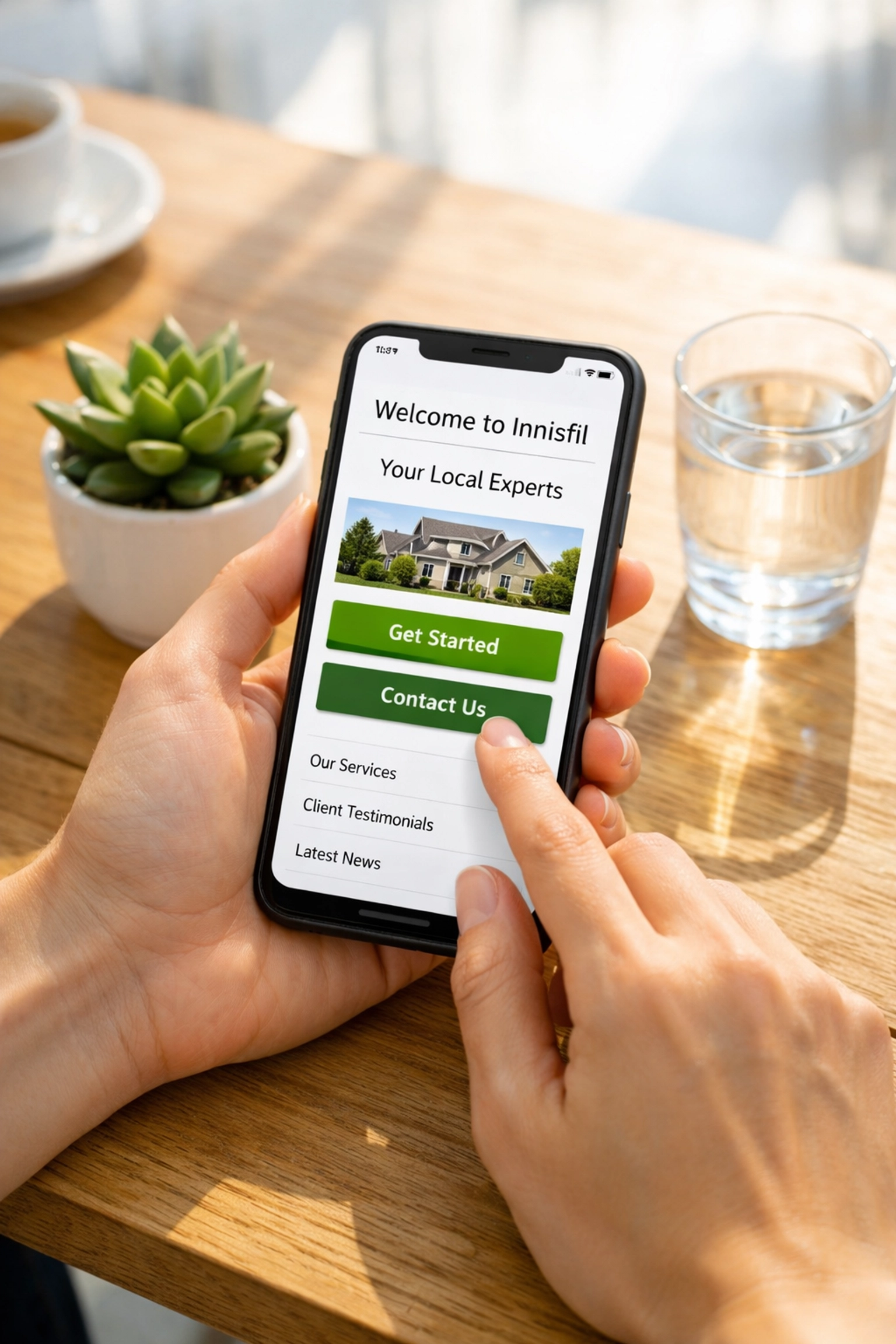
Mobile responsiveness is a non-negotiable aspect of modern web design, especially for local searches. Statistics show that the majority of "near me" searches occur on mobile devices while people are on the go. If your website is difficult to navigate on a smartphone, visitors will likely leave and choose a competitor whose site is easier to use.
A mobile-friendly design ensures that text is readable without zooming and that buttons are large enough to be tapped easily. In addition, a responsive layout automatically adjusts to fit any screen size, providing a seamless experience for your potential clients. This is particularly important for schools or gyms where parents and members often check schedules or locations from their phones.
3. Maintain NAP Consistency Across the Web
Consistency regarding your Name, Address, and Phone number (NAP) is vital for establishing trust with search engines. If your business information varies across different directories or social media platforms, search engines may become confused about your actual location. This confusion can lead to lower rankings or exclusion from "near me" search results entirely.
You should perform regular audits of your digital footprint to ensure every mention of your business matches the information on your website. This includes checking your listings on Yelp, the Yellow Pages, and local chamber of commerce sites. If you need help managing these details, Rachel is available at 705-998-4126 to discuss how our website maintenance services can keep your information accurate.
4. Create Dedicated Location Landing Pages
Creating individual landing pages for each neighbourhood or city you serve is an excellent way to capture hyper-local traffic. Instead of having a single contact page, you can build specific pages for areas like Innisfil, Barrie, or Simcoe County. Each page should contain unique content that mentions local landmarks, community events, or specific services offered in that area.
These location-specific pages allow you to target local keywords more effectively without cluttering your main homepage. By including a map and local testimonials on these pages, you provide both search engines and users with clear evidence of your local presence. This strategy is highly effective for contractors who operate across multiple municipalities and need to show they are "near" each potential client.
5. Implement Local Business Schema Markup
Local Business Schema markup is a type of structured data that you add to your website's code to help search engines understand your business details. It provides clear information about your operating hours, price range, and the specific services you offer. While this code is not visible to your human visitors, it is key for helping Google display rich snippets in search results.
Using schema markup increases the chances of your business appearing with an "Open Now" tag or showing your star rating directly in the search results. This technical optimization makes your listing more attractive and informative, which can lead to higher click-through rates. If the technical side of web development seems daunting, you can reach out to our team at ONLINEid for assistance.
6. Prioritize Fast Page Loading Speeds
Page speed is a crucial ranking factor that directly impacts user experience and local search performance. When a user performs a "near me" search, they are often looking for immediate answers or services. If your website takes more than a few seconds to load, you risk losing that lead to a faster-loading competitor.
Optimizing images, leveraging browser caching, and minimizing heavy scripts are essential steps to improve your site's performance. A fast website not only pleases your visitors but also earns favour with search engine algorithms that prioritize high-quality user experiences. You can always check in with Rachel at 705-998-4126 to see if your current site meets modern speed standards.
7. Add Prominent Click-to-Call Buttons
Including a prominent click-to-call button in your website design is essential for converting mobile visitors. For local service businesses like gyms or contractors, the goal is often to get the customer on the phone as quickly as possible. A button that automatically dials your number when tapped removes friction from the customer journey.
Your phone number should be visible at the top of every page and in the footer to ensure it is always accessible. This simple design choice caters to the "near me" searcher's need for immediate contact. When they call, having a friendly person like Rachel answer at 705-998-4126 ensures they receive the help they need right away, reinforcing the local, personal feel of your business.
8. Embed a Google Map on Your Contact Page
Embedding an interactive Google Map on your contact or location pages is a helpful design element for both users and search engines. It allows visitors to get directions to your physical location without leaving your website. Furthermore, it reinforces your geographic relevance to search engines by directly linking your site to a specific set of coordinates.
Make sure the map is set to your verified business location to avoid any confusion. For businesses that do not have a physical storefront but serve a specific area, you can embed a map that highlights your service radius instead. This visual cue helps potential clients in the neighbourhood feel confident that you are truly local to them.

9. Optimize for Localized Keywords
Conducting local keyword research is vital for understanding how your neighbours are searching for your services. Instead of just targeting "small business website design," you should target phrases like "website design in Innisfil" or "web development company near me." Including these phrases naturally within your headers, meta descriptions, and body text helps search engines connect you with local queries.
It is important to avoid "keyword stuffing," which is the practice of overusing keywords in an unnatural way. Instead, focus on creating helpful content that naturally mentions the areas you serve. This approach ensures your website remains professional and readable while still reaping the benefits of local search optimization.
10. Showcase Local Reviews and Testimonials
Displaying reviews from local customers is a powerful way to build trust and improve your local search standing. Search engines look for social proof when deciding which businesses to recommend. By featuring testimonials that mention your specific city or neighbourhood, you reinforce your local authority.
You can create a dedicated testimonials page or include a scrolling review widget on your homepage. Encouraging clients to mention the specific service they received and their location can further boost your relevance. If you want to see how we handle our own local reputation, you can visit onlineid.ca/google-review/vitaly-frenkel for examples of client feedback.
11. Write Blog Content About Local Topics
Producing blog content that focuses on local news, events, or community projects is an effective way to signal your local involvement. For instance, a contractor might write about "How Innisfil Weather Affects Your Home's Exterior" or a gym might post about "The Best Running Trails in Simcoe County." This type of content attracts local visitors who may not be searching for your services yet but live in your target area.
Localized blogging helps you rank for a wider variety of searches and establishes you as a helpful member of the community. It also provides opportunities to link to your service pages, guiding readers toward a purchase. For more ideas on how to craft effective local content, you can check out the work of our writer at onlineid.ca/author/penny.
12. Use Location-Based Image Alt Tags
Optimizing your website's images with location-based alt tags is a small but impactful detail. Alt tags are descriptions of images used by search engines to understand visual content and by screen readers for accessibility. By including your city or service area in these descriptions, you add another layer of local context to your site.
For example, instead of naming an image "gym-interior.jpg," you could use "fitness-centre-interior-innisfil.jpg." This practice helps your images appear in Google Image searches for local terms, which can drive additional traffic to your site. It is a simple step that reinforces your overall "near me" strategy.

13. Optimize for Voice Search Queries
Voice search is becoming increasingly popular, and it often involves natural, conversational language. People using voice assistants like Siri or Alexa are more likely to ask questions like "Where is the best gym near me?" or "Who is the most reliable contractor in Innisfil?" Designing your content to answer these specific questions is key for voice search optimization.
Creating an FAQ (Frequently Asked Questions) page is an excellent way to target these long-tail, conversational queries. By providing clear, concise answers to common local questions, you increase the likelihood of your website being the "featured snippet" or the answer provided by a voice assistant. This keeps you at the forefront of modern search technology.
14. Utilize Internal Linking to Location Pages
Internal linking is the process of linking one page of your website to another. This is essential for helping search engines discover all your pages and understanding the hierarchy of your site. You should link to your location-specific landing pages from your main service pages and your blog posts.
Strategic internal linking passes "link equity" from your high-traffic pages to your hyper-local pages, helping them rank better. It also keeps users on your site longer by providing them with relevant, localized information as they navigate. For example, a blog post about school website design could link directly to a page about our services for schools in the Simcoe area.
15. Conduct Regular Local SEO Audits
Performing regular audits of your local search performance is key to staying ahead of the competition. Local search trends and algorithm updates can change how "near me" results are displayed. By monitoring your rankings and website traffic, you can identify which strategies are working and where you need to make adjustments.
An audit should include checking your site speed, verifying NAP consistency, and reviewing your Google Business Profile insights. Staying proactive ensures that your website design remains optimized for the latest search requirements. If you find any issues during your audit, remember that Rachel is just a phone call away at 705-998-4126 to help you get your site back on track.
In conclusion, optimizing your website design for "near me" searches involves a combination of technical settings, consistent business information, and localized content creation. By focusing on mobile responsiveness, claiming your Google Business Profile, and using local schema markup, you build a strong foundation for local visibility. Furthermore, maintaining fast load speeds and including clear calls to action like click-to-call buttons helps convert local visitors into loyal customers. Regularly auditing your performance and staying engaged with local keywords ensures that your small business remains the top choice for anyone searching for services in your neighbourhood. As a result, your website becomes a powerful tool for local growth and community connection.